
Top Stories and Alerts

Creek Fit News - February 2026
Show Your Heart Some Love: Understanding Heart Rate Zones
The heart is one of the most important muscles in the human body, working nonstop to keep us alive and energized. During physical activity, the heart beats faster to deliver oxygen to the muscles, and the speed of this heartbeat can reveal a lot about our overall health. This is where heart rate zones come in. Heart rate zones help explain how hard the heart is working at different levels of exercise and why certain intensities are better for specific fitness goals. By understanding heart rate zones, people can exercise more safely, improve their cardiovascular fitness, and truly show their heart some love.

What Is Heart Rate?
Heart rate is the number of times your heart beats in one minute, and it changes depending on what your body is doing. When you are resting, your heart rate is lower because your body doesn’t need as much oxygen. When you start moving or exercising, your heart rate goes up to supply your muscles with more oxygen and energy. Everyone’s heart rate is a little different, but paying attention to it can help you understand how your body responds to activity and stress.
Understanding Heart Rate Zones
Heart rate zones are ranges that show how hard your heart is working during physical activity. These zones are usually based on a percentage of your maximum heart rate and are divided into different levels, from very light activity to maximum effort. Each zone has its own purpose, such as warming up, improving endurance, or pushing your body to its limits. By breaking exercise into heart rate zones, it becomes easier to understand which activities match certain fitness goals and how intense a workout really is.
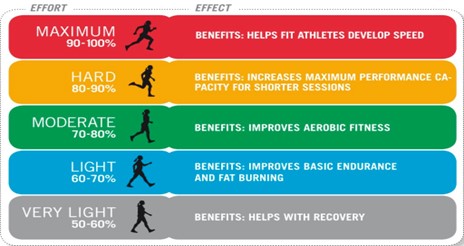
Heart rate zones are usually split into five different levels, and each one shows how hard your heart is working. Zone 1 is very easy movement, like slow walking, and is great for warming up or cooling down. Zone 2 is still comfortable but a little more active, helping build endurance and burn fat. Zone 3 is a moderate pace where your breathing gets heavier and your heart starts working harder. Zone 4 is tough and challenging, pushing your heart and lungs to their limits. Zone 5 is all-out effort and is usually only done for short periods of time. These five zones help break exercise down into levels that are easier to understand and use.
Benefits of Training in Heart Rate Zones
Training in heart rate zones can be really helpful because it takes the guesswork out of exercising. Instead of just pushing yourself as hard as possible every time, heart rate zones help you work at the right intensity for your goals. Lower zones are great for building endurance and improving heart health without feeling completely exhausted. They’re also useful for recovery days, since you’re still active but not putting too much strain on your body.
Higher heart rate zones are more challenging and help improve things like speed, strength, and overall fitness. These workouts can be tough, but they push your body to adapt and get stronger over time. Using different heart rate zones in your training helps create a good balance, so you’re not always going too easy or too hard. Overall, training this way makes workouts more effective, helps you see progress, and can make exercising feel more organized and purposeful.
How Heart Rate Zones Are Calculated
Heart rate zones are usually calculated using a person’s maximum heart rate, which is the highest number of beats per minute the heart can reach during intense exercise. A common way to estimate this is by subtracting your age from 220. Once the maximum heart rate is estimated, heart rate zones are created by taking percentages of that number. Each zone represents a different exercise intensity, ranging from very light activity to maximum effort. For example, lower zones use a smaller percentage of the maximum heart rate, while higher zones use a larger percentage.
However, this method is not perfect because everyone’s body is different. Factors like fitness level, genetics, and overall health can affect a person’s true maximum heart rate. Some athletes use more advanced methods, such as fitness tests or wearable devices, to calculate more accurate heart rate zones. Even though the calculations are estimates, they still provide a helpful guide for understanding how hard the body is working during exercise.
Common Misconceptions About Heart Rate Zones
There are several misconceptions about heart rate zones that can cause confusion for people who are new to fitness. One common myth is the idea of the “fat-burning zone,” which suggests that exercising at a lower heart rate is the only effective way to lose fat. While lower zones do use a higher percentage of fat for energy, higher heart rate zones burn more total calories overall, which can also support fat loss. This misunderstanding often leads people to avoid challenging workouts even when they could be beneficial.
Another misconception is that working out in the highest heart rate zone is always better. Many people believe that pushing to the maximum every time will lead to faster results, but this can actually increase the risk of injury, burnout, and overtraining. Heart rate zones are meant to be used together, with different zones serving different purposes. Lastly, some people think heart rate zones are exact and the same for everyone, when in reality they are only estimates and can be influenced by factors like stress, sleep, hydration, and fitness level. Understanding these misconceptions helps people use heart rate zones more safely and effectively.
Conclusion: Why Understanding Heart Rate Zones Matters
Heart rate zones play an important role in helping people understand how their heart responds to exercise. By learning what heart rate is and how heart rate zones work, individuals can better recognize the different levels of exercise intensity and their effects on the body. Training in specific heart rate zones allows workouts to be safer, more effective, and better suited to personal fitness goals. Understanding how heart rate zones are calculated also helps people see that these numbers are useful guides rather than exact rules. Overall, knowing the benefits and misconceptions of heart rate zones encourages smarter exercise habits and supports long-term heart health, making heart rate zones a valuable tool for anyone looking to improve their fitness.
Join a class at Creek Fit to start exercising in a way that challenges your body, improves your fitness, and keeps your heart strong!